
Loading.
Loading.
Projects
SPARK 26
SPARK releases a set of briefs each year. Every brief is written and run by a student mentor, not handed down from a syllabus, and each one is built here in the lab across a full term using the machines and stock on these shelves.
The 4 briefs released for 2026 are below. Each links through to the full write up: what the build has to do, the approach the mentor set out, and the tools it is put together with.
Run by the Robotics Society, IIT Jodhpur. Hosted at the Anand Rathi Tinkerers' Lab.
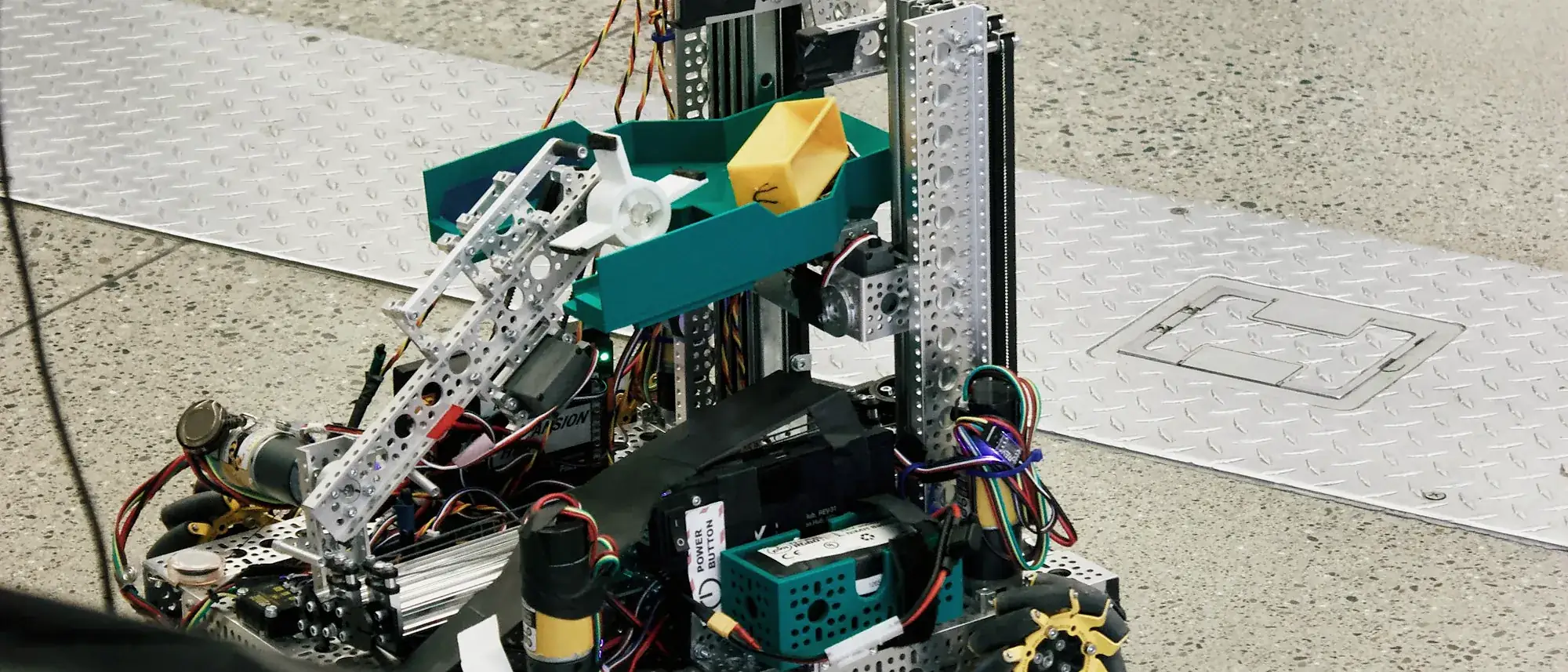
One robot can map a room; a swarm can map a building. Fleets of TurtleBot3 robots are dropped into unknown Gazebo worlds with no map and no teleoperation. Each robot runs SLAM, merges its local occupancy grid into a shared global one, and pushes toward the nearest frontier until nothing unexplored is left. The build climbs from single-robot SLAM through map merging to coordinated exploration with collision avoidance.

A camera on a pan-tilt gimbal locks onto a target and refuses to let go. Every frame becomes a line-of-sight measurement, streamed over UDP into a Simulink interceptor flying Pure Pursuit, LOS guidance and Proportional Navigation. Real optics at one end, a simulated vehicle at the other: a seeker-in-the-loop rig built from a Raspberry Pi, two servos and guidance theory worked out from the ground up.
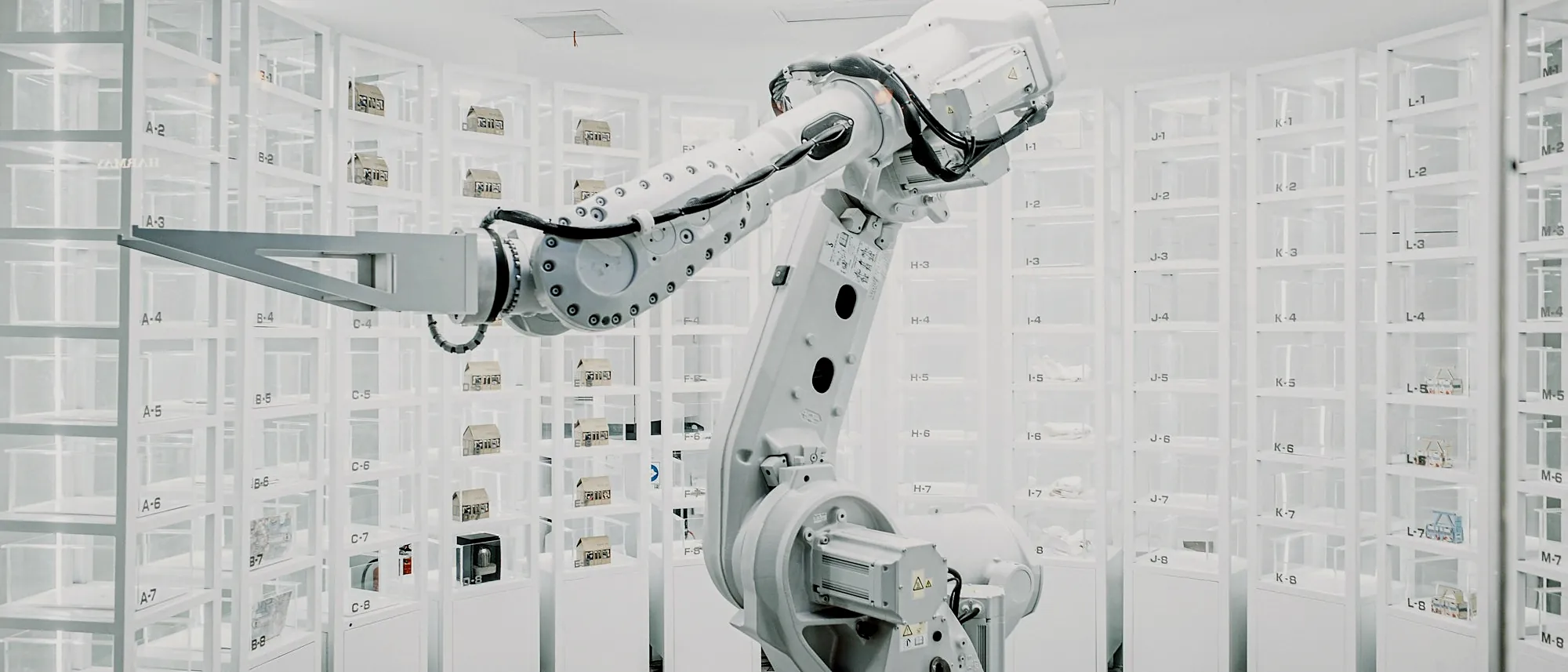
Hand it an image, get back a painting. A three-link planar arm turns contours into brush strokes: paths planned in task space to keep the geometry honest, inverse kinematics solved offline at every waypoint so execution stays cheap, brush angle taken from the local tangent of the curve. Written from first principles rather than pulled off the shelf, validated in simulation, then deployed to an ESP32-driven arm that puts real ink on real canvas.
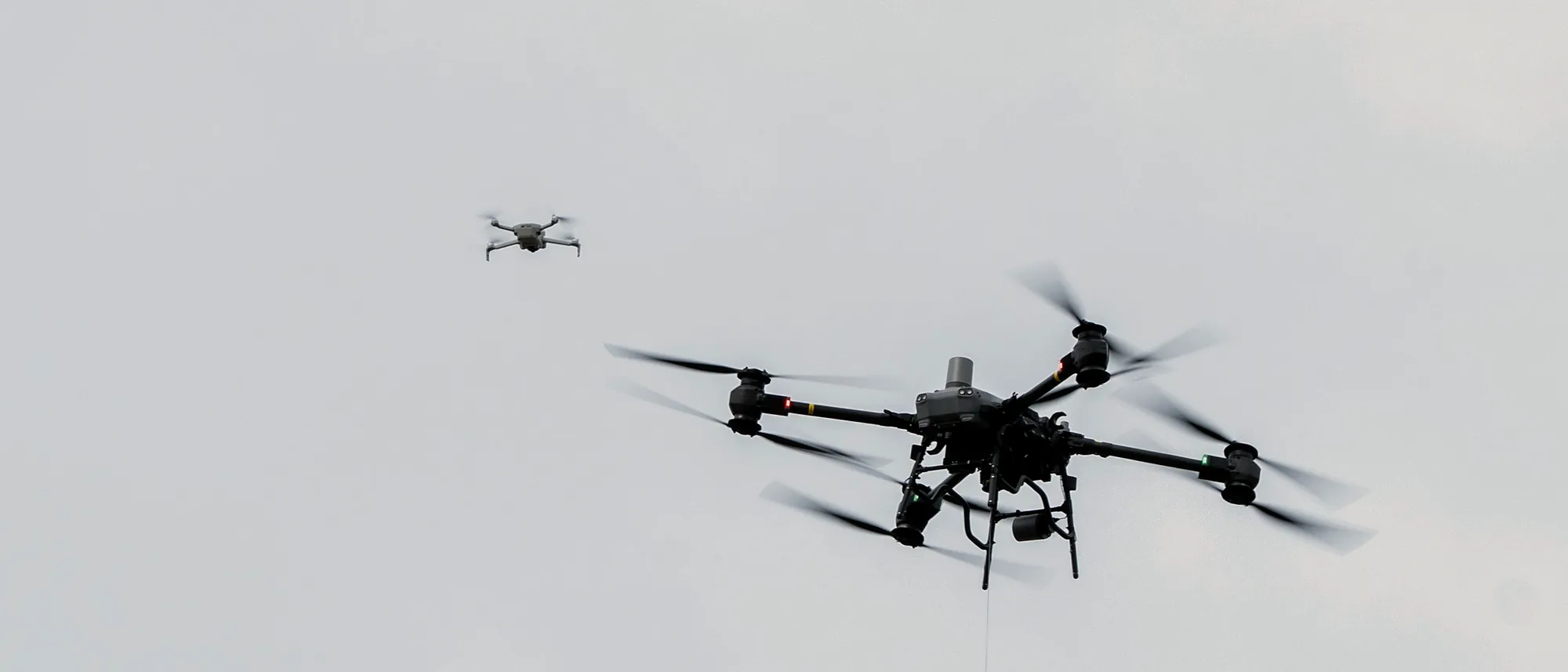
Dozens of drones holding formation looks like magic; it is a control law. Three nano-drones, a guidance vector field that provably converges onto a circular trajectory under a Lyapunov condition, and a formation controller that holds the shape when one drone drifts. Proven in Gazebo, then flown for real under motion capture, with ArUco perception, Kalman filtering and optical flow closing the gap between simulation and hardware.
Builds from before the programme, kept here because the write ups are still useful.
Six-wheeled rover on a rocker-bogie mechanism. When one rocker arm rises the differential drives the other down, holding the chassis level across ground that would tip a rigid frame. At least four wheels stay in contact at all times. Six 300 RPM motors, DPDT wired control, migrating to HC-05 Bluetooth. The next revision targets gesture control via OpenCV.
Bench rig built to prove the differential before it ever went on the rover. Balances motion between left and right rockers and keeps the body stable.
A computer-vision layer that reads hand gestures and maps them to drive commands. The next revision targets full autonomy.
Migration from wired DPDT switching to Bluetooth control over HC-05, keeping the same motor-driver topology.